Denise Bartlett
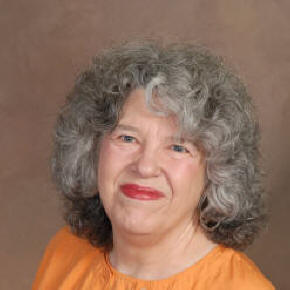 |
Denise Bartlett began writing short stories when she was nine.
Pen and paper gave way to word processors and typing, printing,
reading and perfecting. A dreamer, she has always searched for
deeper meaning and more vivid experiences in her everyday life.
From hypnosis, training with mystics and spiritual people of
many walks to tax preparation and gardening, her interests vary
widely. The thread that runs through her life is imagination.
Denise has written a variety of poetry, short stories and
novelettes, as well as columns and articles on gardening and
income taxes.
https://www.facebook.com/denibartlett |
New Title(s) from Denise Bartlett


Order Through the Flames Print Book!
Click on the thumbnail(s) above to learn more about the book(s) listed.
Congrats to Denise for
being in the top ten book/eBook editors in the
Preditors and Editors
Readers Poll, 2011.

Congratulations to
Denise for being in the 2012 Preditors and Editors top ten
Novel (All Others)
Category for Through the Flames.

 |
Liza Casey called in to
report a double homicide today. Sheriff Bobby Knowles had a
high-school crush on Liza's mother, Elizabeth, who disappeared
without a trace, years ago when Liza was young. Liza's life has
been a maelstrom of tragedies, and this seems to be yet another
one. But what is behind the latest report? Liza says it's the
green-eyed monster.
Excerpt
Word Count: 3496
Buy at:
Smashwords (all formats) ~
Barnes and Noble ~
Amazon
Price: $ .99
|
|
|
 |
When a family works together to make a home and
a life that works, the challenge of relationships and just
getting along can be enough. The Allens live in the same
household about half the year, with Dad making appearances when
professional football season is off. Four teens and mom work as
a unit until tragedy forces them Into the Fire.
Excerpt
Word Count: 21,500
Buy at:
Smashwords (all formats) ~
Barnes and Noble ~
Amazon
Price: $ .99
|
|
|
 |
Football—the Allen family plays it. Larry, the
star quarterback from Bobby Layne High School has great
prospects of following his father into the pros, but Larry has
other goals in mind. For now, he just wants to make it through
high school and marry his best girl, Patrice. The violence of
football produces physical injuries and he begins to wonder what
his future will actually hold.
Excerpt
Word Count: 98100
Buy at:
Smashwords (all formats) ~
Barnes and Noble ~
Amazon
Price: $2.99
|
Reviews
In-House Reviews
|
 |
To order this book in print, please contact
Charlotte Holley at cholley@gypsyshadow.com |
| |
|
| |
|
| Excerpts |
The Eyes Have It |
Peace officer. Hah. Sheriff Bobby Knowles poured single malt
whiskey neat into the same small Support Your Local Sheriff
tumbler his father had always used. His father, Robert Knowles,
Sr., had been the sheriff of Lane County, Texas, for years
before retiring and backing his oldest son’s election to the
spot. Easing into his recliner, Bobby pulled the remote out of
the western-design saddlebags his wife had made for the old
stuffed chair several years before. When he clicked the button,
the pre-programmed CD player dutifully started through a stack
of 20 George Strait and instrumental country music disks.
His back hurt, the worn out muscles sent spasms up his spine and
he knew exactly where the pain originated. The desk chair at
work was hurting his back these days, but that was his own
fault. During his trip to the U. S. Law Expo in Washington, D.
C. last month, paid for by the fair politicos of Lane County,
he’d opted for the latest in technology―three new laptop
computers equipped with satellite uplink and GPS―with absolutely
no money left for new office chairs. Maybe he’d just have to set
aside the money from the meager supply funds and get one. Yeah,
right.
Sometimes he wondered why he had gone into law enforcement. As
he mused, he smiled to himself. His mother had always said he
had gone into peace-keeping. "It’s a worthy field, Bobby. Your
father has kept the peace here for years." He'd thought―there is
no peace, Mom―but had kept that thought to himself. He knew it
was the only way she could justify allowing another of her loved
ones to wear a badge and carry a gun. But he had not been able
to keep the peace.
Being a peace officer had not been enough to keep cancer from
ravaging Jill’s body, either. They’d been married only five
years when she died. They had no children; he alone remained. He
still lived in his parents’ rambling old two-story, built
somewhere around the turn of the century.
Shortly after his dad’s retirement, a car accident way off in
Minnesota had taken both his parents from him. Peace. He could
not believe how much he ached from the times peace had been
replaced by tumult in his life.
Jill. He’d met her his freshman year over spring break in
Galveston. She’d been a fresh, vibrant sociable fireball of a
girl. Her blond hair was straight and her blue eyes bright―and
he’d loved that little birthmark at the base of her throat that
seemed to tremble when she was excited. She’d often been
excited―at football games, at parties, out late at night at
beach parties and alone with him in his car. Those were the
days....
Fun and youth and laughter. Going to Padre Island to look for
shells, feed the sea gulls and watch the sun set on the dunes.
Why did he feel so old and alone today? What was with him?
How he missed her. Jill. He sat staring at the brown liquid in
his glass, moving it slightly to watch the waves swirl against
the insides. He sipped again, letting the fiery liquid burn his
throat as he slid deeper into reverie.
Before Jill, there had only been one other love interest, a
local girl, Elizabeth Casey. He had a huge crush on her, but he
never knew if it was reciprocated. Sitting there in his lonely
house, forty years heavy on his frame, he recalled those high
school days. He remembered very well the long afternoons spent
daydreaming that someday she would be his wife. Unfortunately,
there was a significant block of his unexpressed ardor from the
beginning.
Liz Casey, one of the most beautiful young women in the county,
had the most domineering father Bobby had ever met―maybe the
most domineering man Bobby had ever known. How many times had
the teenage Bobby driven to the end of the driveway leading to
the lonely cliff-top home of the Caseys and turned back after
sitting, staring, wishing for an hour or more? Bobby knew the
number was not low. The young Bobby Knowles had never ventured
anywhere close to the old mansion.
To make things worse, the man Liz had married as the result of
an arranged betrothal was not any kinder than her father to the
way of thinking of the citizens of this fair town, Bobby among
them. Straight out of high school, she was swept off to
someplace off in the Eastern USA to be courted and married. The
town had been abuzz with the news that Elizabeth had married one
of her father’s old friends. Scandalous talk―rumors really,
gossip shared quietly over the side fence for fear of
repercussions―sizzled through the town's grapevine. Elizabeth’s
father was not young when his daughter was born. Her mother had
died in childbirth when her daughter was only ten years old. A
housekeeper, Abigail Carlson, cared for the girl and her father,
as old Naomi Carlson, her mother, had tended the Caseys before
her.
Many believed hers was an unhappy marriage, for Elizabeth rarely
came into town in the months after she and her husband returned
to her childhood home. However, they had seen her blossom with
the birth of her own daughter. For a short time, she had come
out of her shell and spent time in town, showing off her child
and adorning her in lovely dresses made by the local
seamstresses.
Then, fifteen years ago, when her daughter was only six years
old, tragedy had struck. Much to Bobby's horror, at midmorning
of a windy, overcast fall day he was summoned to the cliff-side
mansion. The girl's nanny was crying, almost incoherent in her
worry. She haltingly reported that Elizabeth had disappeared. As
they arrived, his men had spread across the land, working in a
grid from the spot where they found her horse. An avid
horsewoman, she always went for a morning run to exercise the
restive Arabian mare, Katie.
Her beloved bay mare grazed on a long line. The animal was still
saddled, its bridle hanging from the pommel of the saddle, a
rope attached to her halter, keeping her close for the rider who
never returned.
According to Mrs. Carlson, Liz sometimes came here, to the
highest point of land overlooking the sea, to sketch scenes of
nature―she'd always had a natural ability. They found a sketch
pad with a riding jacket folded beside it, but not Liz. Teams of
Search and Rescue dogs and their owners, familiar with the rocky
coastline, were called in at noon. The afternoon wore on. When
darkness approached, a sense of desperation settled in until one
of the men shouted. Then it was a deep sadness which intensified
in the hearts of the searchers when they saw him pointing down
toward the turbulent, rocky waters.
Throughout the long day, Little Liza had refused to stay at the
house, following the movement of the sheriff, as the others
circled around him, watching from her seat on a big flat-topped
rock. She was wrapped in a blanket the police had given her, but
she would not give in to the exhaustion Bobby knew she felt.
It appeared the rocks on the side of the cliff bore some blood,
but the rain and the waves washed it away before anyone could
crawl down to gather it for testing. What had caught the eye of
the man was a flash of color―one of the bonnets Elizabeth always
wore clung below them, against the stark gray cliff side. Its
bright red ribbons fluttered sadly from a crevice. Perhaps it
had flown there on a breeze as she fell―or jumped―to her death.
A storm raged through the night and the evidence, what there was
of it, had washed away.
They spent a week searching for her, hoping against hope that
the young mother would be found alive. After no additional
evidence surfaced, Elizabeth Casey Skews was declared dead from
accidental drowning. The conclusion the police and townspeople
had drawn was that Elizabeth had slipped and fallen to her
death. Wilton Skews and his daughter Liza continued living in
the big manor house with only old Mrs. Carlson helping out as
housekeeper. The nanny had been dismissed.
Wilton remarried three years later. And only three months after
the wedding, the now nine year old Liza had come home from
school to discover Wilton's wife and two stepdaughters brutally
murdered where they had picnicked atop the cliff overlooking the
ocean. Although Lisa discovered the grisly triple homicide, she
didn't witness it. The murders were still unresolved. Bobby
still wondered about it―had it been a random event? The women's
jewelry had been taken, but the house had not been broken into.
|
|
Back to The Eyes Have It |
Into the Fire |
"Mom! Do you know where my silver belt buckle is?" Craig strode
into the bright yellow and white Sunflower-designed kitchen. His
tanned feet were bare and he wore only the new tailored black
denim pants he'd bought to wear to the rodeo that evening. In
his left hand, he held a length of hand-tooled black leather
from which the buckle was noticeably missing. The snap...
snap... snap... that accompanied his entrance came from
the riveted fastener on one end as he opened and closed it.
Suzanne looked up from the pan of okra she was frying for lunch
and a youthful giggle escaped her lips at the sight of her
half-dressed fifteen-year-old son. When she spoke, her voice
took on a loving lilt, "Honey, if you would just leave the
buckle on there, you wouldn't have to search the house when you
wanted it."
She carefully scooped browned okra out onto folded paper towels
with a slotted spoon and moved to turn off the burner. Her dark
brown apron had a big sunflower on it with You Light Up My Life
imprinted in bold yellow letters; her blond hair was pulled back
with a scarf held in place by a big sunflower tie; she wore
summer sandals decorated with big silk flowers; the brown denim
shorts and a yellow T-shirt accentuated her shapely figure.
Craig carefully threaded the buckle-less belt through the loops
on his pants and then took a small bowl from the cabinet.
Picking up the slotted spoon, he scooped the bowl full of crisp
fried okra from the warming tray beside the stove. Crunching on
it, he looked thoughtful. "Mom, I think you are the best cook in
the world, but you need to keep up with my things better." He
gauged her response, then with a chuckle, dodged the towel she
snapped at him.
"Get out of the kitchen!" she said, laughing as well. "Put on a
shirt and call the others to come to lunch in five minutes.
Sharon is working at the library until five o'clock. Larry is in
the garden with Patrice. She'll be joining us."
"Okay, Mom." Craig stuck the last of the small serving of okra
into his mouth, set the bowl in the sink, kissed his mother on
the cheek and walked through the house, calling out as he went,
"Food. Five Minutes. Kitchen. Food for the starving. Drink for
the thirsty. Five minutes." He poked his head into the family
room and called, "Dad, food."
Upstairs, he opened the window in his bedroom, which looked out
across the back yard. The May sunshine and warm air flooded in.
"Larry," he said, leaning out, waving the shirt he had picked
up. "Bring Patrice to the dining room in five minutes." He
laughed and added, "And, for heaven sakes, wash your hands!"
Craig pulled on a T-shirt and smiled at the custom black boots,
handmade ebony hat and dress-tailored silver and midnight
western shirt lined up in his closet. The door was open so he
could just see the clothing and it made him smile. He loved
costumes and dressing up and the first night of the local rodeo
was a great opportunity to get decked out. There was always a
dance at the Spinning Spurs Dance Hall afterward. He couldn't
wait.
Opening his dresser drawer, he began digging through the
contents. He was rewarded with the sought-after belt buckle and
his silver concho hat band, both partially hidden behind a stack
of CDs. After he attached the buckle to the belt leather, he
left the room. He walked past the upstairs central game room,
fiddling with his watch band as he walked, and tapped on Brent's
door. "Bro, did you hear me?"
The voice behind him made Craig jump. "Yeah, Craig, I heard you.
I was watching the game."
"Wow, you scared me!"
Brent chuckled as Craig turned to face him. "You must feel
guilty about something, Bro." Although he was the youngest of
the four children, Brent was growing quickly and fast becoming
the largest of the three brothers. Even at the age of thirteen
he looked a lot like his father, Robert, who played defensive
back for the Marauders. He was running a comb through his wet
brown hair. He wiped the comb on his jeans and then reached past
Craig, set the comb on the dresser and turned to lead the way.
"Who's ahead?" Craig and his brothers were interested in sports
of all kinds.
"'Stros are leading in the bottom of the seventh. The score is 4
to 2." The brothers walked companionably down the stairs, where
they met Larry and allowed Patrice to precede them all down the
hallway. Robert was already in the kitchen with his wife. The
small group of teenagers stopped in the doorway and watched the
married couple smiling as they stepped apart.
"Just stealing a kiss for an appetizer," said Robert. "Everybody
pick up something and take it to the buffet." He set the example
by reaching over and picking up Suzanne, who squealed. "Oh,
excuse me. I thought you looked good enough to eat," he said,
laughing and setting her onto her feet.
Each of them took a bowl or dish and paraded into the dining
room. When all were seated at the table, Larry said Grace over
the food. After they had all been served, Suzanne looked over at
Craig, who was sitting to her left. "Craig, honey, what was it
that you wanted to talk to us about?"
"Okay." Craig looked at his father at the head of the table.
"Dad, I got my scheduling stuff for the fall. I have to sign up
for the required courses and fill the rest with electives. I'm
being," he paused and cleared his throat, "strongly urged,
pushed even, to graduate in December of this year. MIT wants me
to start their courses at mid-term." He frowned and pushed his
fork into a mound of mashed potatoes and gravy. "I don't want to
graduate in December. It's bad enough to graduate before I'm
seventeen, but I want to participate in intramurals with the
Layne team in the spring. I can only do that if I am in high
school."
Craig was a whiz kid. In the fourth grade, he had designed and
built a computer that won top honors at the state science fair.
That achievement, along with exceptional scores on aptitude
tests, had moved him into the next higher grade that year.
Although he loved programming and building computers, he was
also an adept athlete and led a medal-winning comedy UIL debate
team, which he'd organized two years before.
Robert looked at his eldest son. He chewed thoughtfully on a
bite of broiled steak as he listened. When Craig finished
speaking, Robert swallowed and spoke in a gruff voice. "Haven't
we had this discussion before? What does high school have to
offer you at this point? You get bored so easily, son," Robert
said. Suzanne reached over and touched his arm. He smiled and
tried again, forcing his voice to sound more agreeable. "Have
you made a list of courses to present to the counselor?"
"Yes, sir. In the fall, I'll take the last required courses of
Algebra, History, Government, and whatever else I have to in
order to get the diploma. In the spring, I want to take Physics
and pre-Calc, baseball and round it out with a couple of
electives. I know I've already placed out of some of them, but I
want to take the courses."
"To show off?" Robert said.
"No, sir," Craig countered immediately, "to learn the stuff from
a live instructor. I don't think a test can teach me everything
in the course."
Craig," Brent interrupted abruptly, saying, "a test is supposed
to show what you know. If you know the stuff on the test, they
assume you learned it somewhere." Brent looked exasperated.
School studies were not easy for him.
Craig spoke, a serious look on his face, "Brent, a placement
exam can't possibly test you on everything you should have
learned if you had taken the course every day for a semester."
He looked at Suzanne and said, "Mom, do you understand?"
"Craig and I have talked about this at length," she said to the
others, responding to Craig's plea. She looked directly at Craig
and said, "You know I would like to see you graduate next spring
with your classmates. You would like to play baseball as a
senior and I understand that. I also agree with your father that
you get bored easily. If you are sure this is what you want, I
just want you to be happy." She turned to Robert, but said
nothing.
Robert looked around the table and spoke, "Craig, I agree that
you should do what you really believe will make you happy. You
are too young to play collegiate ball, if you even opt for a
school with a competitive athletic program. I'd like to see you
wait until a year from the fall to start college courses as
well."
"Thanks, Mom, Dad. I appreciate that." Craig breathed a heavy
sigh and reached to take his mom's hand and squeeze it. She
smiled at him and he went back to eating.
Larry, Brent and Sharon went to church together most Sundays. On
Memorial Day the church turned her attention to honoring the
country and the men and women who served in the Armed Forces of
the USA. Seated with the pastor was a man in uniform and when he
rose to speak, all eyes were on U S Navy Chaplain Grant Breyson.
Breyson had served in Desert Storm with William Gibson, their
church pastor.
"In the continuing saga of speaking when I am home on leave,
I've come to share a few more of my life experiences with you
and encourage you to show your love to others. I've been a
chaplain with the Navy Seals for eighteen years now. Many of
those years were spent outside the USA, and several in war
zones. I have found friendship," he nodded at the pastor seated
beside him, who smiled at him, "and encouragement from my fellow
service people. Those things, along with the power of love and
the strength of family ties, are the most important things to
keep people in the Service of their country feeling appreciated
for the sacrifices they make. Each of us needs to be a part of a
church, a community, a clan, some sort of group of people who we
know care for us. We need to feel we can drink from a very deep
well of caring.
"One of the most important rewards I ever received was from my
Grandma Shaw. I was the only son of her only son and we had a
special relationship from the beginning. Grandpa Shaw passed
through the gates of heaven when I was only two years old, so I
never really knew him. My Grandma lived until just three years
ago, I am happy to say.
"When I was twenty-five, I graduated from seminary and she
attended the celebration. The next morning was Sunday and we
were all staying at my parents' house. Grandma was up when I
arose early. She had coffee ready and when I sat down, she
hugged me good morning and placed a Bible in my hands. 'Grant,'
she said to me, 'this is your Grandpa Melvin's Bible. I am sure
he is smiling at you from heaven today, sending his blessings.
Every time you pick up this book, I want you to remember those
blessings and how proud you made me and Grandpa when you chose
to follow in his footsteps.'
"This is that Bible," he said, holding aloft a worn volume for
the church members to see, "and every time I open it, I feel
warm and happy to be looking at the Bible he held many, many
times. There's a list in the middle, and beside the date of my
birth with my name and my parents' names, he wrote: 'What a
proud moment for our family: The first grandson.'
"Beside each event is a special comment of the pride and joy my
grandparents felt. This Bible is a vivid representation of love
to me. It brings me closer to them to hold it, but it also
sustains me as a vessel which holds the waters of love I may
drink from.
"Think about your own life and the things that are meaningful to
you. What vessels have you given out or received? Were they
filled with love?
"Each of us can do something to help another person feel love.
In the final analysis, in our hearts we know that in war and in
peace, in youth or old age, in life and in death, our entire
existence and the reason for it trace back to one common thing.
Love.
"And knowing you are loved and showing others you love them is
compassion. In the King James Version of the Bible, there were
three things—Faith, Hope and Charity. Charity can be translated
as love. The greatest of these, said Saint Paul, is love.
"In I Corinthians, Chapter 13, is a blueprint for love." He read
the short chapter aloud, and then said, "Can you think of a way
to give others a vessel filled with love? How would you go about
making a daily, weekly or monthly statement of your caring to
each person in your inner circle? It can be as simple as a
flower, a box of candy or a card, or as complex as you wish.
Include them in your thoughts and prayers and do something for
them. When they are not at home any more, for whatever reason,
continue the ritual. It will make a huge difference in your life
and in theirs." He smiled around to the members of the
congregation and choir. "Show God's love to those you care for
in your daily lives."
Grant sat down and Brother William completed the service with
singing and an invitation to join the church in her mission.
Back home on Sunday afternoon, Larry and Brent sought out their
older sister. "Sharon, we want to talk about the sermon today."
Sharon turned from her desk, several colored pens and an opened
sketchpad occupied the surface. "Yeah, that was something,
wasn't it? I was just thinking about it. I want to do something
for each of you, my family, to strengthen the ties after I move
out."
"Like what?" Larry asked. The brothers pulled up chairs. Larry
sat down on her left and Brent sat on her right. "I've been
trying to think of what to do."
"I'm still working it out. Do you guys have anything in mind?"
"I have thought of one thing so far," said Brent. "I am going to
give Mom fresh flowers every Saturday afternoon."
"Cool, Brent," Sharon cooed. "That’s great. Mom will love that.
Have you thought of anything, Larry?"
"I want to make memory books. I've been wanting to do that for a
while. With quotes from books or the Bible and a little note of
what it means to me to have my family. I expect it will be
something I pound out on the fly and rewrite into the books.
Then I'd just like to share it. I guess with Dad, that would
mean email. We never seem to talk too long on the phone." Larry
frowned. "I always feel kinda lost on the phone with Dad," his
voice trailed off and Sharon reached over and touched his hand.
"I know how you feel, Larry, I always want to ask when he's
coming home." She forced a smile and went back to the subject at
hand. "I think I’m going to write each of the people on my list
a letter every Sunday afternoon. I'll include a little sketch or
drawing I've made."
Brent spoke again, "Since the three of us are going to be doing
something special, are we gonna tell Craig?"
"I might talk to him about it. I don't want him to think we are
preaching to him. After Larry came home saying he wants to be a
chaplain four years ago, he never trusts us." Sharon giggled and
continued, "He thinks we want to trap him into coming with us."
"Yeah, it would be best if you talked to him. You are the
closest, after all."
* * *
Hey, Sharon, we're taking Dad out for his Back to Camp party
this Friday night. You're coming, right?" Craig met his sister
at her little red Camaro and took her library books from her.
"Sure, Craig. What are we going to get him this year?"
"I don't know," he said, then stopped to get his cell phone,
which was buzzing, out of the pocket of his cutoffs. "Just a
sec." Into the phone he said, with the leaden metallic tones of
a computerized robot, "Begin speaking, every word will be sliced
and diced and served back to you." A smile came over his face
and he chuckled, "Yeah, Jessica, I mean it."
Sharon rolled her eyes, shook her head and socked him lightly on
the arm. "I'm going in."
He walked behind her, talking lightly into the phone. In the
kitchen, he completed the call, moved in front of his sister as
she opened the refrigerator, and pulled out a jug of Gatorade.
"So what do you want to get him?" He turned, planted his feet
and stood in her way.
Sharon looked straight into the eyes of her brother. They were
the same height and both had blond hair and athletic frames. Her
hair fell in a mass of long curls to her waist and his was
styled short.
She reached up, clamped a hand on each of his shoulders and
steered him out of the way, saying, "I want him to stay home. I
know he has to work, but I wish he could just stay here. He
leaves in July and I won't see him 'til Christmas, probably. I
miss him when he's gone. What if something happens to one of us?
What about the time we miss being together when he's gone half
the year?"
As she spoke, she took several packages and jars out of the
refrigerator and removed two slices of bread from a bag. While
she fixed her sandwich, she occasionally stopped to slap Craig's
hand away as he reached to intercept each slice of cheese,
vegetable or meat. If he succeeded in intercepting it, it went
directly into his mouth. Eventually, she snatched her sandwich
up and took a bite of it. "Get away! You’re like a starved
monkey!"
He laughed, imitating a monkey's screeching call, and moved away
to perch on the counter and watch her eat. His expression became
serious. "He has to play as long as he's good enough. You don't
just quit professional football to stay home. Besides, Mom is
the one who doesn't want to move to be with him during the
season." He sighed, was quiet for a moment. Then he frowned and
said, "I wish we could move and be close to the team. Then we
could watch him in person instead of on TV."
"Well, Mom has her reasons. One of them is that moving her
children back and forth during the school year would disrupt the
family. She wants to live here. He should listen to her."
They had discussed this many times. Both knew there was nothing
new to be said. "He listens. Then he decides what he thinks is
best. I miss him too, Sis."
"Where's Mom, anyway?"
"She went to get her hair done. She says it has grown out too
much. I love it grown out. I wish girls would let their hair
touch the ground."
"Oh, yeah, you would, Craig. I notice you keep yours short and
easy to wash and comb out. It's a big deal to keep hair like
that. Not all of us are Crystal Gayle. As a matter of fact, my
hair would probably fall out if it was that long. I'd definitely
have a headache."
"Your hair is beautiful and Mom's is beautiful. And Jessica's
and Rachel's and..." He dodged a roll of paper towels, which
was the only thing Sharon had at hand to slap at him with, other
than the sandwich she was eating.
"And where are Larry and Brent?"
"Larry is at some church thing or other. The guy is addicted to
church."
"There are worse things to be addicted to, like computer games,
Craigie," Sharon said.
"Hey, computer games sell for money! Money buys more computer
games." He laughed at her expression. She held up her hands like
she was going to throttle him. He said, "Brent is playing ball
at the YMCA. He should be home around dark. I think he and some
of his friends are coming to watch some movies upstairs.
"Mom has declared this Pizza night. She has already arranged
with Yuskie's Pizza to bring it by at 8." He looked at the
clock. "My friends and I have staked out the living room. They
should be here around 7, I think. Mom wants everybody at home
and the house empty of all non-family members by one in the
morning."
"Well, that shouldn't be too hard. Larry will probably breeze in
at midnight or so from the Coffeehouse. Y'all will just have to
watch the clock, I'm staying over at Cindy's." She had finished
her sandwich and tidied the kitchen while they spoke. "What are
you doing home?"
"I have an idea for a new game." He stopped and made a face at
her, since she'd made the game comment before. "I've been
messing with the programming for the battle sequences." He
smiled and said, "You might like it. It has dragons and unicorns
and stuff, but they don't get killed. Just the heroes and the
bad guys get wiped out."
"Well, I'll come see it in a little while. I found a book on
design I want to look at. Cindy and Lisa and I have been toying
with the idea of living in an old house close to campus. What do
you think about me moving out?" She picked up her books and left
the kitchen.
"I want to live with you forever, Shari," he said in a whining
voice, as he followed her across the hall and into the living
room.
She flipped on the light above the couch, set the stack of books
beside her and stopped to look at him. His look was somber. As
she held out her hand to him, she said, "Craig, come here and
sit down."
He sat beside her and looked into her eyes. Her dark sky blue
eyes were bright and happy and they met his sad dark oak brown
ones with a straight gaze. "Yeah?" he said.
"Craig, I'm not leaving you. I'll be here in town. I want to be
close to Mom and you guys, but I want to spread my wings. I want
to see what it's like to live away from home." She saw him
flinch slightly and her heart went out to him. "We already have
the Christmas holidays planned to spend together. Craig, you'll
be welcome at our place. You can drop by after school. You're
always busy with sports during the semester anyway, but we'll
spend time together on weekends." She giggled. "Maybe you should
take up church. Larry and I see each other at church quite a
bit."
"Aw, Sharon, you know I'm not the churchy type. I never enjoy
sitting still that long to listen to someone drone about going
to hell and all that." He put out his right hand and she placed
hers in it. He traced the lines on the back of her hand with the
fingertip of the first finger of his left hand.
Sharon giggled, her strawberry blond hair flipping behind her
shoulders as she shook her head. "Craig, they don't just talk
about hell. You may hear it, because it may be what you need to
hear. If there's ever a time you want to talk about that kind of
stuff, let me know." She leaned forward and touched the hand
that was moving on hers. "That tickles, Craig." She paused, and
then continued, "What else is bothering you?"
He stopped tickling her hand and sighed. "I'm not ready to have
you move out, but I'll live. It's not like you're moving far
away, it's just that I won't be able to find you and talk when I
don't think anyone else understands."
"Now, you know Mom tries real hard to understand your
idiot-synchrocities." She smiled at him then and touched his
face with the hand he held. "You'll be fine and I won't be
moving until the end of August." She stood up, saying, "So, now,
do you want to show me your new game? Do you have the
illustrations up yet?"
"Yeah, I'm using the graphics I made from Mom's fantasy
drawings, the ones in her high school sketch books. She was
really good." He stopped, pondering, then continued, "I wonder
if she'll ever take the time to do more of her art." He stood.
"I've done computer renderings to make them move and beefed up
the males and made the females daintier, but still strong." He
took her hand. "I worked on the computer upstairs, but it's
networked to the den. Come on in there."
When Suzanne came home, she found them in the den, laughing and
competing at one of the many action games Craig had installed on
the computers. Her own voice held a smile as she said, "I could
hear you two giggling when I was still in the driveway. Who can
have that much fun sitting still and punching away at a game?"
"Sharon can. I just sit here and try to stay interested." Craig
said with a sly grin, leaning forward to take the controls for
his turn.
Sharon reached into her glass, got a piece of ice and then
dropped it down the back of his T-shirt. "Yeah, right, Mister
Please Just One More Game," she said.
He reached under his shirt, got the piece of ice and popped it
in his mouth, then continued playing for just a moment. "Hi,
Mom," he put down the game control without pausing it and stood
up. "So, show me your new hair."
Suzanne smiled and turned in place slowly. Her hair was layered
in soft waves around her face and went in longer curls until it
swept her shoulders. The longer sides and back were gathered
into a big red, white and blue bow. Craig stepped toward her
when she stopped and grinned widely. "I have to admit, it is a
wonderful way to wear it. I like the way it's still long and
pulled back over your shoulders; that is nice. I love you, Mom."
"Thanks, Craig. I can always expect a compliment from you. You
know how to turn a girl's head." She focused her attention on
the computer monitor for a moment. "You lost your game."
"It's just a game, Mom. You're the real thing." He grinned at
her and queried, "Is there anything you need carried in from the
car?"
"Actually, there is. I bought out the sportswear department at
Macy's." She reached out and took her daughter's hand, "Come on,
Sharon, I got you some new things. This nice young man can help
us carry them in." Craig reached for her other hand and they
went through the kitchen and out the door.
|
|
Back to Into the Fire |
Through the Flames |
Prologue
Unnecessary Roughness
Friday, October 12th, 2nd Quarter, Homecoming Game
After fifteen seconds that seemed to last forever, Larry Allen
saw Clay Beckmeyer break free from his coverage and turn
downfield. Time to put it up there. Larry drew back, fired a
perfect spiraling pass and smiled. Oh, yeah, that one just felt
right.
He never saw the completion.
Wham! A helmet dug sharply into his back, blindsiding him in the
ribs. Instinctively moving with the force of the other player,
he hit the ground hard—pinned to the turf by 250 pounds of angry
defender. The impact drove the air from his lungs; he saw stars
hovering in a matte blackness and for a long moment, he
struggled to breathe.
Pain. As he drew the first clear breath of ice cold air, a voice
whispered low and harsh into his ear, “Your mother is a slut,
Allen.” He felt a knee track and find the injured back and
ribcage and punch it. The anger built in him and he shoved off
the ground. The weight moved.
He twisted to see who had slammed him and met the glaring black
eyes of Saunders, the big middle linebacker from Kendall, a star
player from the opposing team. The other man turned and trotted
away.
As Larry rolled onto his side, he realized his helmet had been
partially ripped off. He became aware of the rhythm skipping a
beat around him. The noise in the bleachers dropped
significantly as the students and fans of Bobby Layne High
School held their collective breath. The loudspeaker blared,
“Defensive penalty, number 26, Saunders. Roughing the passer,
automatic first down. Larry Allen is still on the turf.”
Larry lay there on the icy dirt and grass for the space of one
more ragged breath, reached to pull the helmet straight. A big
pair of shoes stopped in front of his face, filling his vision.
He looked up; BJ, the center, stood there gazing down at him,
his hand extended to help him up.
“You okay?” queried BJ, in his slow southern drawl, “or do I
call 9-1-1?”
“Can’t beat Kendall from here.”
On his feet, he checked the sideline for the play and got a
thumbs-up from the athletic trainer. He forced himself into a
trot and moved to gather the offense into a close pack.
Crouching on one knee in the middle of the circle of the
offensive huddle, Larry added a touch of the frustration he felt
to his tone and spoke loudly enough to be heard over the crowd.
“Time to show ‘em how it’s done.”
The announcer’s voice rang out over the crowd. “The home team
doesn’t have much time before the half, folks. Seven minutes
left on the clock and neither team has scored. Layne has not
been held to zero points in any game the last five seasons.”
They broke the huddle and trotted to their positions. As he
turned to line up behind BJ, Larry felt dizzy for a moment,
stumbled and went down to one knee. He came back to his feet,
but not before he heard, “Time Out!” from Coach Parker on the
sidelines. He frowned, trotted to the sidelines and loosened his
helmet. “McKean, you’re in. Allen, take a break.”
“No, Coach!” Larry exploded.
“Get off the field. Follow Kelly.”
“But Coach, I’m okay. I just stumbled. Kendall wants me out of
the game.”
“Of course they do, but you gotta get checked.”
“You never did this before! Please, Coach, you’ve let me stay in
with worse than a stumble.”
“Don’t remind me—meet us in the locker room at the half. You’re
wasting my time. Cut your losses and follow Kelly.”
Fuming, Larry removed his helmet and followed the team doctor to
the locker room. Morgan, one of the assistants, went along
behind him.
“Okay, let’s get on it, Larry.” The coach pointed to the Heads
Up Poster taped on the glass of his office door. “Read me the
symptoms and tell me which ones you have.”
Larry frowned, “Headaches isn’t fair—I had a headache when I got
here.”
“So that’s a yes?”
“Yes, sir. Nausea or vomiting. No. Balance Problems or
Dizziness. I was just a little shook up. I stumbled. Well, I was
a little dizzy, saw a few stars when I hit the turf.”
“So that’s a yes?”
Larry frowned and said, “Yes, sir. No on all the rest—I am
confused as to why I got pulled, but no confusion.”
“Let me go through the questions with you.” Doctor Kelly went
through a series of questions, which Larry answered correctly.
He took a stopwatch and a green folder with the word BESS on it
from a nail and pointed at a taped square on the floor. “Shoes
off, stand there. We’re gonna do the six balance tests. Morgan’s
gonna spot for you. He’ll step in if you lose your balance, but
only then. He is also allowed to help you get back into
position. Hands on hips, feet together—like this, close your
eyes. I’m gonna start timing twenty seconds when you close your
eyes.”
Morgan nodded and went to stand at Larry’s right side.
“Yes, sir.”
“Close your eyes. Begin—Twenty seconds. Okay, which foot do you
kick with? The right. Then stand on your left—like this. Hands
on hips. Close your eyes. Begin—Twenty seconds. Stand on both
feet. Okay, put your left foot behind the right one in a line,
toe touching heel, stay on the diagonal inside the square.
Begin—okay, we’re gonna restart. Begin—Twenty seconds. Morgan,
put the foam block in the square.”
Morgan picked up a thick foam block and put it inside the tape
marks.
“We’re gonna do ‘em all again, Larry. You okay?”
“Yes, sir.”
“Step onto the pad, stand on both feet. Hands on hips. Feet
together. Close your eyes.” A few minutes later, Doc said, “That
series is tough. You did as well as your baseline last summer,
so you pass. Thanks, Morgan. Go on out to the team.” When the
door closed behind him, Doc said, “So, I need to know who to
contact. Has your home situation changed?”
“No, sir. It’s still just Craig and Brent and me. The three
musketeers. The contact is still Doc Lance.”
“It’s a big responsibility for you boys, no adults around.”
“Yes, sir. But we’re okay. The Lances are right down the street,
Craig is eighteen. We talk to our parents every week.”
The doctor sighed, “Okay, I am relying on you to go to the
Lances if you need help.”
“Yes, sir.”
“Now, remove your shirt, sit on the table—you know the drill.”
The doctor placed the stethoscope against the warm skin. “Deep
breaths.” With each breath, the doctor moved the scope. “Pain?”
“Yes, my back on the right.”
“What kind of pain?”
“Burning.”
The doctor prodded the swollen ribs of the young man’s lower
back, digging his fingers around where the arc of bruising
started. “Here?”
“Yes, sir.” Larry winced with a sharp intake of breath.
“He hit you with his helmet?” One of the posters on the door
read: Your Helmet Is NOT a Weapon. Use Your Brain.
“Yes, sir.”
“Both arms over your head.”
Larry reached upward.
“Pain?”
Poking again, right where it hurt.
“Yes, sir.”
“Bearable?”
“Yes, sir.”
“Okay, I’m gonna release you to play after half-time, so get
cleaned up. I’ll wrap those ribs for you before you put your
clean shirt on. That was a savage hit you took.”
“They wanted me out of the game. Thanks for letting me go back
in, Doc.”
Chapter One
Homecoming
Friday, October 12th, Halftime
Friday October 12th. Halftime at the Homecoming Game, the most
important football game of any season at Bobby Layne High
School. The bright stadium lights shone across the field; the
marching band strutted across the goal line. As the band took
the field, the steaming football players moved off of it at a
trot, retreating from the frosty turf to the moderate
temperature of the locker rooms. They quickly peeled out of
their muddy uniforms, washed up and dressed again in clean, dry
clothes for the second half of the grueling duel.
Lifting their helmets from battered lockers, the embattled team
moved to sit on the aging grooved and pitted oak benches around
the chalkboard. These long flat seats, which had been smoothed
by the rears of countless players, held the emotions and stories
of dramatic plays, last-second wins and sudden-death losses by
almost a half-century of tough and not-so-tough athletes.
The assistant coaches went over a few plays, then a whistle blew
and Coach Parker walked in and waved for them to gather around.
Silent, the team crowded in to hear the words of their mentor.
“Men, the scoreboard is showing nothing accomplished in the
first two quarters. You lulled the crowd and even the collegiate
scouts and reporters into a peaceful sleep. They’re all
wondering what they are doing at a football game on Friday night
when they could be out dancing the polka at Oktoberfest.”
“Wake ‘em up. Get the ball. Make the plays. Take some chances!”
he bellowed. “Larry Allen,” he said to the auburn-haired young
man in the number 11 jersey, “Kelly says you can go back in.”
The team applauded and yelled encouragement.
Larry nodded, walking up to the front row of athletes.
“You are the star.” Coach Parker paused and spoke clearly. “This
is your chance to shine or fade into a black hole. Get these
bozos out on the field. You’ve got three minutes, meet me at the
ramp.” He turned on his heel with military precision and left
the room.
“Yes, sir!” The answer came in enthusiastic tones, belying the
speaker’s frustration. Larry moved to stand in front of the
team. “This is your captain speaking,” he intoned, his voice
mimicking a commercial jet pilot at takeoff. “Please put your
seats and serving trays in an upright position. This flight will
be leaving in exactly three minutes, make sure you are on it.”
He met the eyes of several of the other players, and then spoke
urgently to the group. “Get back out there and take control of
this game. Make the school proud of us. Let’s play ball.”
|
|
Back to Through the Flames |
| |
| top |
|