Jim Woods
|
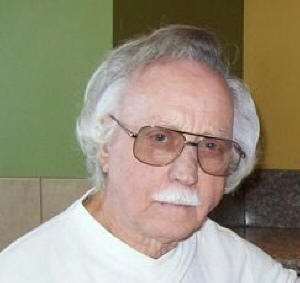
Jim Woods wrote novels and short stories, many of which stand
alone, while others are assembled into collections, in
worldwide milieus. He was a world traveler, having researched
numerous exotic locales as settings for his stories. Much of
his world travel was for big game hunting which, coupled with
his background as editor with Petersen’s Hunting, Guns & Ammo
and Guns magazines, frequently allowed him to bring firearms
into play in his tales. Jim Woods passed away October 8, 2012;
he lived and wrote in Tucson.
Learn more about Jim at:
http://users.dakotacom.net/~jwoods
|
New Title(s) from Jim Woods







Click on the thumbnail(s) above to learn more about the book(s) listed.
|

|
English usage and grammar textbooks, at least
those volumes when in paper print, are so big, so heavy…so
complete. Students toting books and laptops in backpacks need
relief, just as home authors can use more space on their
reference bookshelves. So, You Want To Be an Author? takes up
little space and weight but most importantly provides immediate
answers to questions about grammar, spelling, punctuation and
writing style. No searching through voluminous chapters in
textbooks or scrolling incessant computer files. Pick a subject
and go right to it for realistic examples of literary usage
drawn from the author’s more than four decades working both
sides of the editorial desk. Let his experience as magazine
Editor, Managing Editor, Editorial director; independent book
editor; and his four hundred articles and thirteen books as a
fellow author, be your compact and shortcut guide along the path
to literary success.
Excerpt
Word Count: 31,000
Buy at:
Smashwords (all formats) ~
Barnes and Noble ~
Amazon
Price: $ .99
|
| |
|
 |
These accounts of shooting birds and hunting
big game mostly relate the author’s adventures in North
America—Canada and The United States. Game species encountered,
or hoped to encounter, include mule deer, whitetail deer,
blacktail deer, pronghorn antelope, elk, bear, turkey and geese.
But by convenience, and necessity because all his hunts don’t
fit neatly into the confines of North America, and the author
had no other place to tell a couple of unique hunt stories, this
volume also includes reports of dove hunting in Honduras and red
stag in Spain. Mainly, this collection tells the story of one
hunter who just happened to be a writer and whose job sometimes
required him to go hunting, making him, if not a PH
(professional hunter) then perhaps a PTPH (part-time) or a SPH
(semi). Either way, for him it was a dream job.
Excerpt
Word Count: 35000
Buy at:
Smashwords (all formats) ~
Barnes and Noble ~
Amazon
Price: $ .99
|
|
|

|
Three separate women with separate stories; all
with guns, all with a mission. Marlene as “The Husband Hunter”
had a husband but couldn’t keep him, but found him after years
and a global search, and then didn’t want him... alive.
Veronica simply was misguided; her sole and desperate interest
was protection of her family against imagined evils, but she was
set straight following a neighborhood encounter where “The
Streetwalker’s Price” was a life-preserving lesson. “A Gun in
the House” offers a sense of security and comfort, and
protection against intruders, but Constance testifies not all
the threat comes from outside the home.
Excerpt
Word Count: 12,750
Buy at:
Smashwords (all formats) ~
Barnes and Noble ~
Amazon
Price: $ .99
|
| |
|
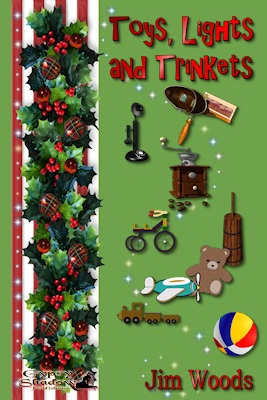 |
The stories in this eclectic trilogy are
unrelated, except for their setting at the end of year holiday
season. The first must be saddled with the based on true events
disclaimer; the next is related just the way it really happened;
and the last story is pure fantasy.
Excerpt
Word Count: 8000
Buy at:
Smashwords (all formats) ~
Barnes and Noble ~
Amazon
Price: $ .99 |
| |
|
 |
The story opens with a very strange cargo for
an oxwagon driver—the comatose body of a woman whose passage is
paid by a man fearing for his life. When the driver takes on the
load, he also takes on unexpected adventure for everyone
involved on the long and perilous overland trip.
Excerpt
Word Count: 22900
Buy at:
Smashwords (all formats) ~
Barnes and Noble ~
Amazon
Price: $ .99 |
| |
|

|
Ever wish you could call back a promise you've
made? David Stone, American, has adopted South Africa as his
home and Marjie van der Leun as his lover. It's an on-again,
off-again affair, but during one of the on-again stages, David
made a commitment which would come back to haunt him. In a
reckless moment, David said he would kill for her. Now Marjie
wants to call in that favor.
The arrangement involves a lot of money and once David is "in
for a penny, he is in for a pound," as the saying goes.
The plot thickens, Marjie is prosecuted for the murder and David
thinks he has gotten away... until...
Excerpt
Word Count: 50000
Buy at:
Smashwords (all formats) ~
Barnes and Noble ~
Amazon
Price: $ .99
|
| |
|
 |
Jim Woods was a sports hunter writer,
outdoorsman and game hunter. Follow his journey from his early
beginnings in the Navy through many hunting adventures, both in
the Eastern and Western hemispheres as he searches for and bags
trophy game.
Excerpt
Word Count: 98600
Buy at:
Smashwords (all formats) ~
Barnes and Noble ~
Amazon
Price: $5.99 |
| |
|
| Excerpts |
So You Want to be an Author? |
Introduction To The Real World Of Publishing
Acquisition Editors at the book publishing houses, and literary
agents, big and small, are overloaded with work. Thanks to the
computer age, thousands upon tens of thousands of manuscripts
are submitted to them every year, and the numbers continue to
grow. While the publishers are reducing their payrolls by
cutting down on staff just to stay afloat in a tenuous economy,
the agencies, many of which are single-staff proprietors, simply
cannot handle the increase of prospective work that crosses
their transoms. Reduced editorial staffs and inundated agents
coupled with the ever-increasing numbers of submissions to those
offices have resulted in a logjam of manuscripts that seems to
grow in quantum leaps.
It doesn’t take much of a perceived problem with a manuscript to
cause it to be tossed out as unworthy of the editor or agent’s
already crowded work schedule; they look for reasons to diminish
the backlog. It may be the cover letter; it could be the paper
stock on which the manuscript is printed; but more than likely
it’s the grammar, punctuation, spelling, usage and structure of
the first two or three pages... and that’s all that will ever
be read!
The first strategy in combating the problem, to allow the editor
or agent to get further into the story to find out how really
great it is, is to ensure that grammar, punctuation, spelling,
usage and structure are as perfect as they can be made to be, by
double and triple pre-editing before submitting the manuscript.
We’re not talking style or storyline here; no amount of diligent
copy-editing will build a stronger plot or develop more
interesting characters. Those must come first with talent
(which, of course, we all have in abundance), then guidance from
qualified instructors and critics (not your spouse or best
friend), and then the tedious re-write(s).
It could appear to some that the answer to getting published is
simply to circumvent the overcrowded, overworked system, and
become your own publisher. The proliferation of information
technology has spawned numerous avenues for self-publishing.
According to which publishing newsletter or website to which you
subscribe, there are perhaps half a million or several million
self-published or vanity-published or web-published book titles
on the market. However, the buying public can be just as
critical if not more so than the professional editor or agent. A
poorly done book, poorly written and poorly edited, will quickly
get the bad name that will inhibit future sales. Self-publishing
is not altogether an ill-conceived idea, but putting out a
nonprofessional book, regardless of the publication and
distribution media, is bad for the industry and the author.
Subsequent sectors in this book will offer tips and insights on,
and examples of, those little glitches and gremlins that can
turn an editor or publisher away from your own potentially great
article, short story or novel. Of course, any advice treatment
must include a disclaimer:
This book is not an English, grammar, spelling or punctuation
textbook for the classroom. It does, however, serve as a useful
adjunct to those textbooks, and reflects the practical side to
all those literary disciplines as viewed by an author/editor who
has worked both sides of the editorial desk for a lifetime.
Teaching professionals will view the lessons presented here as
incomplete, and that would be true if it were intended to be a
course-study textbook. It does not pretend to contain all the
answers to writing in the English language, but rather is
designed, by use of examples and referral to the author’s
personal experiences as both editor and author, to make writers
think on their own and produce manuscripts less likely to be
rejected prematurely. If you remember no other rule of
commercial writing, it is this: The Editor is always right.
|
|
Back to So You Want to be an Author? |
Hits and Misses |
Honk If You Love Geese
Choosing a favorite big game species is a difficult and
arbitrary decision for me. My selection could be swayed by the
latest daydream inspired by one of my trophy mounts on the wall,
or by one of my rifles that I associate with a particular hunt.
I might vacillate between an African species that I have
collected several times, or one that almost collected me; or I
might settle on the noble western mule deer that I have loved to
hunt. It would be a tough choice. But among the birds,
everything comes second to geese.
For no good reason that I can offer, I do not have a taxidermy
mount of a Canada goose, although I favor those mounts with
giant wings cupped for landing. The only tangible goose
decoration in my writing work space is a pair of carved birds;
not decoys, but miniatures carved of fir and not painted, just
the natural color of the wood.
What makes them special is that they were fashioned by a Cree
Indian, carved over several evenings during the winter freeze
that imprisons the far reaches of Ontario, and finished to
splinterless perfection by being scraped with broken glass. Not
that the Indians could not get sandpaper if they wished it; on
James Bay where the Crees live, the historic Hudson Bay store
still supplies all the necessities of life, and that could
include sandpaper. Why broken glass then, instead of sandpaper?
Because they have broken glass, and materials on hand are to be
used. It could be called conservation and recycling.
Geese are godlike to the Crees. Tribal hunters take them by the
boatload under the native subsistence laws of Canada, and the
tribe does subsist on geese for the entire winter when the
waterways freeze over. For a people normally given to hard work,
days of forced inactivity produce some native art of exceptional
merit, including my toy geese.
I do love the big birds. If there is a greater thrill than a
flight of geese lifting off the water and flying past my blind,
I haven’t experienced it yet. It’s exciting to have them pass
close enough to get off a shot, and a pure satisfaction to bring
one or two down from the flight, but many have been the times I
was content to watch them pass without my ever slapping a
trigger.
It’s another thrill to have the grand creatures come to your
call and decoys. In fact, I’m not sure I could say whether
sitting in a morning blind waiting for and experiencing the
liftoff and formation or turning the birds from a high flight by
a coaxing call is the more exciting.
Much of my sitting in blinds waiting for the over-flights has
been on Maryland’s eastern shore of the Chesapeake. There is
little in the United States to compare with the Chesapeake when
it comes to geese. James Michener captured the spell of the
geese in the novel, Chesapeake, and to have written that novel,
he had to have experienced the flights over Chesapeake Bay. If I
were to build a permanent waterfowl blind on Chesapeake Bay, I’d
outfit it with a pew for a bench, for at no time do I feel more
in church than when the geese fly.
I was fortunate to have hunted the Chesapeake without having to
compete for space along the public accesses, and without the
necessity of joining one of the expensive private clubs that
control much of the admittance to the waterways. All my
Chesapeake experience has been as a guest of Remington Farms.
Remington, the arms and ammunition people, at the time operated
Remington Farms on the bay. The farm, which included a wetlands
sanctuary, was a virtual field laboratory for wildlife habitat
and related sciences. It was common to observe university
students and wildlife biologists at work on Remington Farms, and
not only on waterfowl projects but also on those associated with
deer and small game, and with general agricultural-improvement
methods that benefited farmers nationwide.
In addition, some limited hunting was authorized, controlled
hunting being a prime wildlife conservation tool. Remington
utilized the setting to host outdoors writers from time-to-time
for introduction of the company’s new firearms products. Those
sessions usually included a couple of days of hunting. It was
during these sessions on Remington Farms that I enjoyed my
well-remembered Chesapeake Bay goose hunting. At all times when
hunting on those press junkets, the Chesapeake geese were
zealously protected, by the federal waterfowl regulations, those
of the state of Maryland, and perhaps most rigidly of all by the
caring custodians of Remington Farms.
The geese at Remington Farms do not originate at Chesapeake Bay
but only stop there en route to wherever their instincts take
them on their annual journeys. The geese moving down the
Atlantic and Mississippi flyways, and perhaps some that take the
Central Flyway as well, gather for their odyssey at James Bay,
the southern projection of Hudson Bay between Ontario and
Quebec. The birds don’t necessarily originate there either. Most
of them are spread much farther north, summering all along the
northernmost perimeter of Canada, including frigid Victoria and
Baffin islands and all of the Arctic landfalls.
|
|
Back to Hits and Misses |
Women with Weapons |
“What do you mean,” she screamed, “there’s nothing the police
can do? He stole my money! Don’t you understand? My husband took
all my money from my IRA and he’s gone. Run off. With my money;
a hundred thousand dollars! That’s robbery. He’s a thief! Why
can’t you do something?”
“Ma’am, please control yourself. Shouting and abuse don’t help
matters. There is no indication of theft here. Now I suggest you
take this up with your bank, or perhaps your lawyer can do
something for you as a civil matter, but there is nothing
pointing to a crime in what you’ve told us. I’m sorry, Missus
Tucker, this simply is not a police matter.”
Marlene Tucker was shocked beyond tears. She had to make the
trip to Missouri; Aunt Catherine became ill and no other family
member could, or would, make the effort to attend her. First the
hospital in Kansas City for four days and then more than two
weeks at Aunt Catherine’s home, nursing her back to
self-sufficiency. Bedpan duty. Nursemaid. Cook. Housekeeper.
Marlene didn’t mind, at first; she loved her aunt. Now she hated
her.
Philip telephoned her daily, or she him, and sometimes both
ways. He was supportive, or seemed so. Said he missed her. She
assured him she’d be home soon, but had to be truthful; her care
to Aunt Catherine was going to run into weeks, maybe even a
month. He’d muddle through, Philip assured her, “You take care
of Aunt Catherine; I’ll take care of things here.”
Oh, he took care of things all right! Philip hadn’t called her
at her aunt’s home for the past three days, and he didn’t answer
when she called him. Marlene was fearful Philip had an accident,
or a heart attack. Finally she had to leave her aunt on her own
and she rushed home to Portland expecting the worst—and found
it, but not at all what she dreaded. Philip was not at the
house. The houseplants were dry and wilted. Philip’s car was in
the garage; his key ring on the hook near the front door. The
front door was not locked; the security alarm was not set.
Marlene could not say what prompted her to look in Philip’s
closet. Some of his clothes remained, but most of them were
gone. Philip was gone. She went to his underwear and socks
drawers. Mostly empty. Fear turned to trembling understanding,
to anger, to rage, to utter shock. Philip had left her like a
thief in the night. The unspoken phrase ran through her tortured
mind and triggered her to action.
Noting the time, and realizing the bank was closed for the day,
Marlene went to her computer and accessed her account. She was
relieved to note the checking account balance was more or less
normal, close to the four thousand dollars they always tried to
keep for operating expenses and small emergencies. Then she
scrolled down to recent activity, and terrified understanding
came to her in a shockwave. Three days ago, some six hundred and
fifty thousand dollars had been withdrawn. A week before, two
super large deposits were made, totaling a similar amount. The
sonofabitch! He had cashed out both their retirement accounts,
nearly a hundred thousand in hers and more in his, more than
five hundred thousand. He got away with over six hundred
thousand dollars! But why would he do this? Where would he go?
Marlene had nowhere to go but to the police. She called 911.
The dispatcher calmed Marlene as best she could and upon
understanding the extent of Marlene’s hysterical trauma,
suggested an officer on the scene was not the remedy, and coaxed
Marlene to come down to the station and talk with someone in
person. The dispatcher assured Marlene she would have an officer
apprised of the situation and Marlene would be expected. But the
police detective, sympathetic but firm, turned her away.
|
|
Back to Women with Weapons |
Toys, Lights and Trinkets |
Ghost Breakers (third story in book)
The wizened old witchdoctor in Zimbabwe had been right all
along. Although he obviously did not know us—my wife Anne and
me—he was much too believable in his wisdom. He somehow knew
things about us he had no need or right to know, but we
solicited the interview. No one tricked or coerced us to consult
him, so we listened to him. Anne and I were a lot younger then,
and at the same age, and on one of our several safaris in
southern Africa when the old Mashona gentleman consulted the
bits of carefully arranged chips of mystic bone that spoke to
him. One of his revelations predicted Anne would live ten years
longer than me. He was right on; I crossed over a full decade
before Anne joined me once again. And while it is true, there is
a time to die, Anne’s family would take her passing especially
hard, it coming so near Christmas—a time that should be reserved
for happy memories.
Even though I left earlier, and fittingly, in the fall of the
season and the autumn of my time, I couldn’t stay away. Our
lifetime together was too strong in the physical world to be
fractured, simply because I happened to be deceased. I hung
around the house to keep Anne company. Admittedly, a few friends
and even family tittered behind her back about her carrying on
conversations with me. We tried to pay no attention, and really
were not offended. In fact. it was amusing to us knowing what
was going on and they only could guess, and speculate that Mom
or Grandma, depending on which generation was the questioning
source, was hanging on to the cusp of dementia. Anne and I held
a lifetime of memories to recall between ourselves, and we
untiringly relived and talked them over.
Anne and I stood together, hand-in-hand, at her funeral service.
Being unseen, except to one another, made it easy for us to get
a front row view. The Anne beside me was beautifully young, and
she noted the same about me. Shucks, I don’t mean she said I was
beautiful, just she thought me young and in my prime. We both
agreed the body on display the day before at the funeral home
was not Anne, but some wrinkled lady who still showed evidence
of having been beautiful, and if we examined her closely, my
red-haired Anne did show through. Everyone in attendance had
nothing but kind words for my bride, as they did for me as well,
ten years back. The difference was at my wake; everyone still
talked respectfully about me, which was to be expected since
Anne was present for all the comments and conversations. That
condition changed somewhat drastically at the after-service
gathering in remembrance of Anne. It was our granddaughter,
Rochelle, whom we both loved, who opened the less than lovable
exchange with her mother, Anne’s only child, Charlene, from her
first marriage which went awry before I came into her life.
<<>>
“What are you going to do with all of Grandmother’s crap?”
“I’m surprised you’d say something like that. Mom and Dad may
have accumulated a lot of things over their lives and travels,
but certainly no crap. They always bought quality.”
Good for you, daughter, Paxton telepathed. You tell her!
“Sorry, I didn’t really mean it that way. They just have so much
stuff. How do you even start disposing of it all?”
“Let’s not rush into disposing of anything. I still have to
locate the will, although Mom has told me everything goes to me
and I’m listed as executor.”
What do you mean, have to locate the will? It’s right where I
told you it would be, in the safe, and the safe combination is
pasted behind that framed certificate in my library.
|
|
Back to Toys. Lights and Trinkets |
Oxwagon |
“Are you sure she’s alive? She looks dead to me and I don’t
transport dead bodies for any price. For that matter I don’t
take passengers either, so we have nothing to discuss. No deal.”
“Verdoem, man. Cover her back up; I don’t even want to look at
her again. I’ve got to get rid of this woman. She’s driving me
crazy and she tried to kill me.”
“Then why didn’t you just kill her? If she tried to kill you,
you’d be justified. Unless, of course, she had reason to. But
actually, I don’t want to know. I’m just not taking her on this
trek.”
“Man, you’re in the transport business, and this is cargo I need
transported. Why can’t you take my business? I’ll pay to have
her transported to Fort Salisbury. Tell me, what are your
rates?”
“But I do not take passengers, much less a woman. This is hard
country. We barely survive it ourselves, what with the rains,
the mud and the fever. And we lose oxen on every trek, if not to
the lions, then to their exertion of pulling too much weight
over bad country. Their strong hearts simply fail, or they break
a leg and we have to shoot them. And when they get tired and
cranky they fight among themselves. That’s why we take along
extra teams of the animals. We lose too many on a trek. Don’t
you understand? This trek is too hard as it is. No passengers to
make it even worse!”
“Verdoem, Clayworth, this woman is not fit to be called a
passenger. She’s freight, pure and simple. And if she does not
survive the trip, I don’t care. Dump her off just by the side of
the road as you would any other damaged freight. So, tell me.
What is your rate to Fort Salisbury?”
“See here, now, Hannes. You know my rates very well. They’re the
same as any other transporter’s. This won’t do you any good, but
Johannesburg to Fort Salisbury is a three-leg trek. The first
leg is from Johannesburg to Palachwe; the next is to Bulawayo;
and the final leg is on to Fort Salisbury. My rates are
twenty-five shillings per hundredweight, per leg. That’s
seventy-five shillings. Man, you could buy her a salted horse
for that if she wanted to go to Fort Salisbury and she could
join a train on her own.”
“I never said she wanted to go to Fort Salisbury. I want her as
far away as I can put her and Fort Salisbury fills that bill.
Look, I know she’s swaarly, more than a hundredweight. I’ll
double your price. One hundred and fifty shillings, a shilling
for every pound, to take her with you all the way to Fort
Salisbury. Dump her off there and she’ll never find her way back
here again. What do you say?”
“I say no, just as I’ve been trying to tell you. No passengers.
Passengers have to eat and the trip takes twenty to thirty weeks
and that’s if we have fair weather. That’s a lot of extra food
to carry or find along the way. A man could be useful on a long
trek, but not a woman. A man can stand night watch. He can chop
firewood. He can wade the mud to pull the trek-oxes through. A
woman. Bah! On a wagon trek she’s good for one thing and one
thing only. And not good at all when my partner and I would
share her. No. I won’t do it. Take her away. I have to inspan
and get on my way. Sunlight is a wasting.”
“Now see here, Clayworth. I’ll pay you triple. Two hundred and
twenty-five shillings to take this problem off my hands and the
load off my mind. What do you say?”
Jerrick Clayworth, grim and tight-lipped, forced himself to hold
back lashing out again to the Afrikaner, Hannes Crouse. He
considered the offer of two hundred and twenty-five shillings,
more than eleven pounds, more than enough to pay for a
replacement ox when he lost one, as he was sure to do somewhere,
sometime on this trek. And if the woman died along the way, or
went on her own way once they were a few days out of
Johannesburg, then so much the better. But is she really alive?
Jerrick lifted the woven-reed lid from the deep and sturdy woven
grass basket once again for a confirming examination. The woman
was dressed in man’s breeches and boots, with a shirt top that
was male as well. She made no sound. He bent low to inspect her,
noting no bleeding wounds, but more importantly no smell of
death about her; an earthy odor but certainly not dead.
“How did she get in this condition? What’s the matter with her?
Why is she unconscious and how long has she been this way?”
“She’s just knocked out for a while. She’ll come around.”
“What did you give her?”
“I got the potion from a sangoma. I don’t actually know what’s
in it.”
“Then how do you know she’ll come out of it?”
“The old teef told me she would, and if she don’t, I’ll wring
that witch’s scrawny black neck and take back the two goats I
paid her.”
“Well she don’t look dead, but if she does come out she’s going
to get really messy in short order when her body starts to
function again. We’ll have to get her out of that basket. I’ll
spread a bullock hide to lay her on so she don’t piss or crap
all over my goods when she wakes up.”
“Danke, Clayworth. Here, I’ll help you with her.”
“Not so fast. I’ll take the shillings first; otherwise she stays
in the basket and goes home with you instead of on the trail
with me.”
Grumbling, Hannes counted out two hundred and twenty-five silver
shillings, and in so doing, emptied the bag. Jerrick noted and
realized Hannes knew all along how much he would have to pay and
was prepared with just the right amount. Hannes cupped the
coins, returned them to the pouch and handed it over to Jerrick.
Together the two men spread the hide over the crates and
baskets, and stretched the still inert figure on it.
“Does she have a name?’
“I always called her Gertie. Gerta, I suppose?”
“And her surname? Hell, man if she dies on me I have to be able
to burn a name on the crossed sticks. I couldn’t leave her for
the animals.”
“Verdoem, man. Don’t bother to dig the ground for her. As far as
I know even she doesn’t know her father’s name or even who he
was. She’s just Gertie and the hyenas won’t check her pedigree.”
|
|
Back to Oxwagon |
The Outlander |
Chapter One
David Stone seldom went to sleep at night without acknowledging
he was perhaps the most fortunate bachelor on Earth. After
college in California, he practically had fallen into his job, a
well-paid management position, allowing him to return to the
country of his birth, South Africa, a locale of which he held
scant actual memory. Others’ recollections passed on to him,
combined with old photographs, triggered false memories of a
father he had never known. He knew now his father had been a
professional hunter, a safari operator. It was rare for an
American to hold such a position in this country and David
treated the knowledge as a birthright of near royalty for
himself. David had been on safari several times, enjoyed an
impressive salary and social position, and all the female
attention that money could buy. Life indeed was good; David
Stone had everything to live for.
David stirred and groaned at the first summons from the distant
kitchen telephone. At the second signal he tossed aside the
light comforter and swung his long frame upright, legs dangling
over the side of the king-size bed. By the third insistent
chirp, he was awake enough to curse his boss in California, who
refused to authorize the trivial expense of adding a second
instrument for the bedroom of the company-leased condominium in
Durban.
Alex Becker, absentee owner of PCI (Pty) Ltd, in addition to
being cheap about minor expenses, also demanded the full
attention of any employee who happened to be the object of his
thoughts at any particular time. He reasoned with the nine-hour
time differential between the United States west coast and South
Africa, a call placed to South Africa during his local business
hours stood a good chance of finding his area manager in bed
instead of in the office or out on the road. He wouldn’t
tolerate sleep-befuddled answers to his questions, so his scheme
was to ensure David always had to be sufficiently awake to find
the telephone at the other end of the house, and therefore be
alert enough to reel off all the correct responses.
David once again resolved to put in the additional phone at his
own expense, but knew that he wouldn’t, because Alex would raise
Holy Hell about it when he commandeered the guest bedroom on his
next unannounced visit. As much as he enjoyed thinking about
crossing Alex, he knew that he would not. His position as almost
total controller of the South Africa office provided him a very
comfortable, even lavish, lifestyle he wouldn’t jeopardize. He
was more or less fully functional when he snatched up the
handset.
“Private Computers International,” he puffed into the
instrument. “This is David Stone.”
The call had to be from Alex this time of night, David was
certain, and his absentee employer demanded formal business
telephone protocol. A clerk from the office who stayed late with
David one evening, then on until morning, had been helpful in
answering the telephone in order to let David continue his
recovering slumber. Her pleasant and sensual hallo sounded
anything but businesslike to Alex, and she was instantly
dismissed from her job and David came perilously close to being
yanked back to California. Since then, David’s guests were
warned away from taking incoming calls and he was careful always
to be professional on the telephone, no matter what the time of
day or night.
“Dave? This is Marjie.”
The voice jolted him. She didn’t have to say Marjie Who. David
remembered Marjie. When he first took the assignment in South
Africa three years before, he’d taken stock of the local talent
and identified Marjie as a sexy airhead. He was only half-right;
she was sexy. She also was a very smart engineer who’d developed
the power module allowing the PCI computer to work on the
peculiar 50-cycle, 230-volt electricity produced and distributed
by South Africa’s national electric power company, Eskom. Marjie
worked for Eskom but, thanks to some expensive and persuasive
encouragement from Alex Becker, her efforts had been
instrumental in opening the Southern African market to PCI
immediately after the post-apartheid government took over in
1994, when foreign investment in the country once again became
an attractive proposition. PCI was able to beat the competition
to the marketplace by several months, and still held onto that
advantage.
David had been the recipient of a Masters fellowship sponsored
by PCI, and his brilliant thesis on marketing opportunities in
Third World countries won him the managerial assignment with PCI
in South Africa. PCI joined with Eskom in a
politically-motivated venture to bring technology to the
underdeveloped nations of sub-Saharan Africa. Thereafter, at the
local implementation level, David and Alex together coordinated
closely with Marjie, a working threesome by day and, after
hours, one or the other of them a playful pair with Margie,
according to her fancy.
Marjie permitted both PCI-exec Alex and second-in-command David
to court her, but she’d been promoted to an assignment to
electrify the rural northern Transvaal a couple of years ago,
and David had lost contact with her. Marjie’s departure
apparently had been Alex’s reason for the abrupt decision to
wrap up his personal control over the South Africa operation,
ceremoniously turning it over to David and immediately returning
to the company’s home base in California. Now Marjie was back in
David’s life, and his groin ached pleasantly in remembrance of
their times together... and Alex was not hovering nearby to
claim a share of her.
“Marjie! How’ve you been? Where are you? What’s going on with
you?” He wanted to say something clever and smooth, but felt
tongue-tied and angry with himself because he couldn’t control
his thoughts or his voice. What kind of schoolboy must she think
I am? he wondered, but Marjie cut in with her assurances of how
much she missed him. She explained that she had gone back to the
family home in Cape Town for a while after her project in the
north was finished. She had just returned to her own home in
Pietersburg and wanted, no needed, to see him.
“Davie, do you remember when you...” she struggled for the
words, “offered to eind die lewe of someone for me if I ever
needed it? Well, I need to talk to you about that now. There’s
twenty thousand in it for you. Can you come?”
Wheeew, he blew silently, and was quiet for just an instant too
long. Marjie was necessarily fluent in English as the language
of commerce and technology in South Africa as in most of the
rest of the world, but in this very personal turmoil she
reverted to her traditional language. She had used the
Afrikaans, end the life. Murder someone!
“Daaave,” she came back impatiently, “didn’t you mean it?”
He remembered. When she found out he was keen on firearms, she
pursued him with pleas to make her a shooter, and he enjoyed the
attention. He instructed her in the use of several guns, from
the FN-FAL battle rifle used by the South African military to
his favorite personal handgun, the Browning Hi-Power
nine-millimeter pistol. She was an eager pupil. The excitement
of their shooting sessions carried over to the bedroom. Once, he
teased that if she ever needed anyone removed, she had only to
call on him. Her thrill at the prospect of him killing someone
at her direction moved Marjie to even greater appreciation.
“Yes, I meant it,” he struggled to assure her. He’d lost her
once. Now with the prospect of having her back, he wasn’t about
to give her up again over some silly notion she harbored about
killing someone. He had spent only a few weeks collectively in
the United States over the past three years of being posted in
South Africa and had become completely at ease with the local
currency, rands. However, he still converted to dollars to know
what prices were in real money. Twenty thousand rands was
roughly five thousand dollars. “I can take care of that for you,
but it’ll cost fifty thousand. Haven’t you heard about
inflation?”
“Done!” she exulted. “I would have given you a hundred!”
Hey, she’s serious! What am I letting myself in for? “Just who
am I supposed to kill?”
“I don’t want to talk about this kind of business on the phone.
Let’s meet at the Carlton. I’ll drive in and get a suite where
we can talk in private. Can you fly up tonight?”
Durban—almost six hundred kilometers from Johannesburg, he
computed quickly; Margie’s base in Pietersburg about half that.
“No, I’ll drive up in the morning. In fact, I’ll leave in three
or four hours and be there in the early afternoon. I’ll get the
hotel and call you at home and we can meet there later that
evening. What’s your phone?”
Now it was her turn to hesitate. Clearly she wanted to control
the venue, but eventually she gave her grudging approval to the
plan. She stumbled over the telephone number as though having
difficulty remembering it, then blurted out the four digits. As
David wrote them down on his phone-side pad, he automatically
added the area prefix for Pietersburg. “I’ll ring you up from
the city,” he said hoarsely, and hung up.
No, he thought, I’ll ring you up right now! Then, halfway
through dialing he slammed down the receiver. Sprinting to the
bedroom, he pulled on the navy-blue sweatpants he’d laid out in
preparation for his early-morning roadwork regimen—eight
kilometers at a dedicated runner’s measured pace designed to
cover the distance in an easy half-hour—then struggled into the
matching pullover top emblazoned with Santa Clara in yellow
script across the chest, and Broncos on the back He snatched his
keys, change and handkerchief from the dresser-top valet and
jammed them into the muff pocket, then pulled on his tackies,
stuffed the hanging laces into the shoes against his bare feet
and rushed to the carport. The Mercedes responded to the turn of
the key and squealed down the drive, then onto the street that
would take him over to Windemere Plaza and the public phone.
If I’m right, he thought, she will have to go to the post office
to find a coin phone in Pietersburg. Having driven extensively
over the past three years through the sparsely settled Transvaal
Province in presenting PCI’s computer system to potential
clients—the exception to spotty populations that characterized
the rural province being the Johannesburg/Pretoria megaplex—he
knew that the post offices in the smaller towns were the only
places to find public telephones this time of night, and
generally they were located in the seedier parts of downtown.
David reasoned that Marjie would have to drive several minutes,
perhaps even a quarter of an hour or more, to get from the
upscale Ster Park neighborhood where she lived to the only post
office in Pietersburg, and her return trip might give him enough
time to verify she did not call from her personal telephone. As
he wheeled into the plaza parking lot, he spied the lighted
phone pod and was relieved to note that it was not in use.
Another problem with the public telephones, as he and all the
whites were aware, was the instruments were normally tied up by
the blacks who did not have phones at home; they monopolized
them for hours. This time of early morning, even the
street-blacks were not hanging around the telephone. His first
thought, since the cubicle was unoccupied, was he would find
only the broken and frayed, dangling cable but he was relieved
again when he found the instrument, to be in working order.
Using his crisp, white handkerchief, he dry-sanitized the
assumed-to-be-contaminated receiver and mouthpiece with a couple
of determined rubs, and then tossed the streaked cloth in the
nearby wire trash bin. He dropped a two-rand piece in the coin
slot and determinedly punched-in the regional code for
Pietersburg and then the home number Marjie had given him. It
rang on the other end three times before an answering machine
responded in her purring voice. Okay, he reasoned, she did not
call from her home. She’s making sure, as I suspected, no record
of the call from her telephone could ever be traced to my
number. I’ll have to be just as careful from my end.
The leisurely drive through the few blocks to his neighborhood
gave him time to muse over just how he would stay a step ahead
of the beautiful lady Marjie while also getting her into his
bed. Back at the condominium, he dropped into that friendless
bed still fully clothed, with Marjie, not at all so encumbered,
the prime focus of his schemes and fantasies.
Fighting to clear his head of drowsiness just half an hour ago,
he found now he could not sleep. He stripped off the jogging
clothes, ran the shower hot while he shaved, then lunged into
the revitalizing spray and steam. In the kitchen, he switched
the automatic coffee pot from his normal wake-up time to ON, and
watched gratefully as the life-giving drip started almost
instantly. Then he wet-tracked across the gray stone-textured
tile to the bedroom. As he draped the towel across a
maroon-upholstered chair he wondered, what does one wear when
negotiating a hit contract?
After two cups of coffee, brewed to his still American
taste—South Africa offered many culinary pleasures, but the
provincials simply could not make decent coffee—and half a box
of Baker’s Tennis Biscuits, one of those off-the-shelf culinary
pleasures—he dressed for the drive to Johannesburg.
|
|
Back to The Outlander |
My Journey |
A Long Walk Home
This account of my birth is enhanced family verbal
history—enhanced because I don’t know precisely what dialogue
was spoken, although the gist of it is faithful to what I’ve
been told. I’m not certain that my mother remembered exactly
either, and quite likely recalled and told it a bit differently
each time I heard it from her. However, the story is as I
remember it being told to me, and of course I have no personal
memory of the events.
“Virgull! [My father, Virgil Neff Woods] Ah kain’t go no
futher!”
Already some fifteen steps ahead of her, he deliberately took
two more as though he didn’t hear, and then disgustedly set down
the two battered and mismatched suitcases. He unslung the water
jug hanging by the rope loop from his shoulder, and turned to
face her.
Her streaked, blonde, straight, sweat-matted hair clung to her
colorless features. She hadn’t put on lipstick in four days.
Even her normally blue eyes were dusky gray.
The tattered sweater, once blue like her eyes, now faded by the
years and grayed by the dust filtering upward from her every
step, hung limply on her shoulders. The stretched sleeves
covered half of her hands so that only her fingers were exposed
below the frayed cuffs. She had needed the wrap in the coolness
of the morning when they started out just after first light. Now
at midday in mid-September, the Arkansas weather was steamy.
Still, it was easier to wear the sweater than to carry it and
the sniffling boy too.
Her dress once had been a bright flowered print. She traded and
coaxed cloth from neighbors until she had enough of the
multicolored flour sacks in the same pattern to make the only
maternity dress she had ever owned. She had worn it while
pregnant with the boy, now in her arms, two years ago.
Threadbare and almost bleached out, once again it stretched taut
across her swollen stomach. The soles of her flimsy sandals gave
way to the piercing of every pebble in the road, and her feet
were bruised and dirty.
“We can make six more miles today,” he objected gruffly, then
relented to the persuasion of her silent tears.
Under the refuge of a hickory tree just turning to yellow
alongside the grassy roadside ditch, he fished cigarette makings
from the bib pocket of his overalls. To conserve tobacco, he
packed the paper loosely from the Prince Albert can, twisted the
ends to keep the cherished narcotic in place, and then popped a
wooden match into flame under his grimy thumbnail. When the
paper flared and the tobacco glowed, he stuck the half-burned
match to the grass and twigs she had gathered for a cook-fire.
He appreciated the tree that sheltered them, but cursed the
forest around Hardy [Arkansas] that finally had run out, causing
the mill to shut down. It had been degrading for him to go
hat-in-hand to her sister’s family in Fort Smith, and beg to
stay on with them until he found another job. There should be
jobs. It was 1934; the Depression was turning around, the
nation’s economy on the way to recovery—Mister Roosevelt said
so. Then came the letter from his own sister Catherine [Pierce]
in Paducah [Kentucky] telling him that the Illinois Central Shop
was hiring—and paying forty cents an hour!
Paducah was three hundred miles away. Train fare was impossible
for them, so they set out afoot, and had been lucky with rides
while they walked along the main roads. They crossed the Ozark
Plateau in three days, sometimes hitching a ride on a wagon or
truck. They even slept under a roof every night; on the ground
huddled in their coats in abandoned or dilapidated barns, but at
least not out in the open. Now at Marked Tree, they turned
northeast through the Mississippi Valley to cut across the
corner of Missouri into western Kentucky. The main flow of
commerce moved in the tug-towed barges on the river, so the
surface roads through the region were lightly traveled. The
single car going in their direction passed with a blaring horn
and a flurry of dust. They had walked nine miles.
She untied the rope from around the heavier suitcase, and
removed the cast iron skillet and the battered aluminum pan that
long ago had lost its handle. Then she dug out the bag of flour
and measured a couple of handfuls into the pan. From the Clabber
Girl can, she added a pinch of baking powder, and lastly, a
sprinkle from the saltbox. She twirled the ingredients briefly
with her single tablespoon, and formed a depression in the
center of the mixture.
He pulled the cork from the jug of tepid, cloudy water reclaimed
from a farm pond back down the road, washed the dust from his
mouth with a swig, and handed her the bottle. She poured some
into a tin cup to give the fretful boy a drink, and then clucked
soothing endearments to quiet him, while she splashed more water
into the flour mixture. When it was stirred into a thin batter,
she used the same spoon to measure lard from the tin to the hot
skillet where it sizzled and smoked, and spooned three pools of
the batter into the skillet. She then retrieved the spatula he
had shaped and thinned from a broken board with his clasp knife
on their first night’s stopover.
After the batter was covered in bubbles over the entire top
surface, and the bubbles broke, she flipped the hoecakes over to
cook them through. The edges of the bread were burnt and crisp,
while the centers were plump and soft. When the first one was
done, she passed it to her husband. She turned her attention to
the boy, crumbling the next hoecake in a tin plate and pouring
syrup over the pieces from the almost empty Log Cabin can. Then
she mashed the bread into a gooey mixture and spoon-fed the boy.
She was snatching a bite of her own bread in between feeding the
boy when He demanded, “Don’t we have some of that baloney left?”
Setting her lunch aside, she probed once again into the kitchen
suitcase and produced a greasy paper package, and remembered the
meager feast of last night.
They agonized over the decision, but had spent a precious dime
for their first meat in three days. It was hard to wait as the
butcher sliced a few pieces from the cloth-wrapped sandwich
loaf. When the man realized how desperate was their hunger, he
rolled another sheet of butcher paper into a cone and filled it
with crackers from the barrel out in front of the counter. They
protested that they didn’t have money for crackers, too, but he
insisted that crackers were free with the purchase of bologna.
They carefully divided the meat and crackers into two portions
and put half away for the next day, even though what they
acquired was barely enough for one meal.
She unwrapped the package and gagged at the odor, and her eyes
brimmed at seeing the formerly fresh pink bologna now slimy and
tinged with green. The crackers, also closed up in the hot and
airless suitcase, had gone stale and soft. Her weeping turned to
near hysterics at the waste, and he stoically resolved not to
add to her misery. He wouldn’t voice the deserved accusation
that she should have known this would happen when he insisted
they not eat it all at one time. Besides, she cried at
everything these days.
She separated the crackers on the butcher paper in the forlorn
hope that they would dry in the air and perhaps serve as an
acceptable snack to pacify Bobby [My brother, Bobby Gordon
Woods] before the next meal, then solemnly fried the last of the
batter.
After another sip all around of the just barely drinkable water,
she started to repack the suitcase, because she knew that he
wouldn’t allow them to rest here for very long. As she twisted
around in her sitting position to stretch for the fry pan, she
felt a sharp, penetrating pain and screamed him out of his
musings of the good life to come. “Virgil! The baby’s coming!”
“Don’t be silly, Ethel Marie! [My mother, Ethel Marie
(Burns)Woods] You’re just upset over that damned baloney. You’re
not due for two weeks and we’ll be at Cat’s way ‘fore then.”
“No! It’s coming. I know it is and it hurts! You’ve got to help
me!” Her panic was real and contagious.
“What can I do?” Now, scared at his inadequacy, he was yelling
at her. She had no right to involve him in this business that
was her doing.
“Get the coats... and the boy’s diapers!”
|
|
Back to My Journey |
| |
| |
| |
| |
| top |
|